January 18, 2012
SOPA, the bill that would grant power to the US government to censor websites, punish users, and have unprecedented control over the internet in general, is up for a vote next month. Despite all of the feverish activity, now is not the time to slow down. This is a sprint – the vote is next month – and the money (via campaign contributions) behind those supporting the bill is growing. 
January 18, 2012 0
November 2, 2011
Atos, one of the tech firms providing the huge power, communications and computing and infrastructure that will be crucial to the games' success has compiled a list of ten technology facts: 
#1.
The Technology Operations Centre unveiled this week is the technology ‘Mission Control’ for London 2012 – it oversees the results, IT security, power and telecommunications for all 94 Olympic venues.
#2.
Over four billion of us are expected to tune in to watch our favourite athletes perform on TV – over two thirds of the world's population.
#3.
200,000 hours - or 23.5 years’ - worth of testing will be carried out on the IT systems before the games start, to simulate and prepare for every possible scenario. To put that in perspective, that’s the equivalent of 8,333 days’ work.
#4.
The Technology Operations Centre will be staffed by 450 people working 24/7 under one roof to keep all 94 Olympic competition and non-competition venues running smoothly.
#5.
If the British summer is playing up, we could take a tip from the Chinese – who shot weather rockets into the sky to stop rain clouds soaking the audience and spoiling the party at the Opening Ceremony!
#6.
For the first time ever, commentators will have touch-screen Commentator Information System technology for every single Olympic Games sports - delivering real-time results high speed. Ten more sports have been added to the system compared to Beijing 2008. London 2012 will also be the first Summer Paralympic Games to use this Commentator Information System, with five sports added to the system.
#7.
London 2012 will be a greener, more sustainable Olympic Games. A special plant will supply electricity, heat and chilled water to the London 2012 Olympic Park using technology which produces 33 per cent lower CO2 emissions than from the electricity grid.
#8.
You can leave the cash at home! London 2012 offers people the chance to attend without cash but still pay, by using ‘contactless’ cards which will be swiped over a reader like an Oyster card to make payments. More than 5,000 retailers so far have signed up.
#9.
The Technology Operations Centre at London 2012 will also be able to process 30 per cent more results data than Beijing 2008 to meet the rapidly increasing demands of fans for information anytime and everywhere.
#10.
With 8.5 billion PCs, smart phones and tablets predicted to be connected to the internet by 2012, the London games are set to be the biggest ever online.
November 2, 2011 0
November 1, 2011
You have likely been told many times different facts about solar energy. Of course, it is hard to know which facts about solar energy are actually "facts" and which are more like opinions.
This article is going to relay to you some of the top facts about solar energy. Are you ready? Here we go:
#1.
The human use of solar energy is not new. The history of solar energy is rich. Building methods have for many centuries taken account of the sun’s movements in optimizing its warmth and light.
#2.
The facts about solar energy are not just about technology however. The facts of life include that the adoption of solar energy alone is not going to bring about a sustainable world. Without a greater warmth of positive human interaction it will still be a cold, and unsustainable, world.
#3.
Many ancient civilizations worshiped the sun as the cause of everything. Ancient and modern North- and South-American Indian tribes worshiped the sun. The ancient Egyptians worshiped their sun god Ra.
#4.
In the late 15th century Leonardo Da Vinci already conceived of an industrial use of solar power by employing concave mirrors to heat water.
#5.
Such facts of solar energy mean that solar energy is now also attractive to developing countries with remote isolated areas. This is because the possibilities of stand-alone solar appliances negate the need for expensive grid infrastructure.
#6.
As renewable energy technology develops and fossil fuel prices increase solar energy becomes more affordable. And there are no crippling, rising importation costs of coal, oil or gas.
#7.
he sun is 109 times bigger than the Earth. The sun’s radius being 696,000km and the Earth’s radius 6, 376km.
# 8.
Solar power. The sun’s average surface temperature is 5700 C. The Earth’s average temperature is 20 C. And we are worrying about global warming of some 3C!
#9.
The sun is about 150 million km from the Earth and is aged about 4.5 billion years.
#10.
Solar radiation reaches a unit of space near the Earth’s orbit at a rate of 1,366 W/m² (Watt per square metre), as measured upon a surface normal (at a right angle) to the Sun. This number is the "solar constant". Of this energy, about 19% is absorbed by the atmosphere, and clouds reflect a further 35% of the total solar energy. Therefore solar energy received a sea level is much less. Its peak power is generally accepted to be 1,020 W/m².
#11.
The average received solar power on land is lower still. In North America for example the average power of the solar radiation is roughly between 125 and 375 W/m², that is between 3 and 9 kWh per m² per day.
#12.
Solar cells have about a 15% efficiency rate in converting that energy. Therefore solar panels deliver only 19 to 56 W/m² or 0.45-1.35 kWh/m²/day of that average power. But that does not make solar energy inefficient!
#13.
The average solar energy falling on Australia is equivalent to about 15.000 (fifteen thousand!) times the nation’s present total energy use. At 15% conversion rate that is still more than 2000 times the present need, providing we could capture it all.
#14.
In recent years manufacturing costs of photovoltaic cells has dropped by 3-5% per year while government subsidies have increased. While to some such facts about solar energy seem trivial, this makes solar energy an ever-more affordable energy source.
# 15.
The worldwide production of solar cells increased by 60% in 2004. However, the material these cells are made from, silicon, has been in short supply since then and has hampered production.
#16.
The energy output of a 1 KW solar energy unit is roughly equivalent to the burning of 170 pounds of coal and 300 pounds of carbon dioxide being released into the atmosphere.
# 17.
.At the end of 2005 total global peak power of installed solar panels was about 5,300 MW.
#18.
Solar energy is the Holy Grail of the transport industry. The 3021 km Australian Darwin to Adelaide annual car race for solar-powered vehicles seeks to promote its research. It attracts international competition and is making some headway. In the first race, in 1987 the competitors average speed was 67 km/hr. By 2005 it was 103 km/hr! Speed may not be among the most important facts of solar energy but the solar transport industry’s gains are. Car exhausts of course, are a leading cause of global warming.
#19.
The human ecological footprint is big. In some countries bigger than in others. There are around 2 billion world citizens without any electricity at all. To them the facts about solar energy are that they cannot flick a switch to bring it on and are often steeped in poverty.
# 20.
The world's largest solar electric system was claimed by Germany. The 10 megawatt Bavaria Solarpark covers 25 hectares (62 acres) with 57,600 photovoltaic panels. But since the 1st of September of 2006 it's in...
#21.
However it is in the Mojave Desert in North America that houses the world's largest solar power plant. It covers 1000 acres (4 km²) of solar reflectors. An astonishing ninety percent of the world's currently commercially produced solar power is produced by it.
#22.
Africa’s Sahara desert, assuming 15% efficient solar cells, could generate more than 450 tarawatt (TW) per year. Current annual global energy consumption, including fossil and renewable sources is about 13 TW.
#23.
About half of worldwide production of solar panels is consumed by Japan. Their purpose is mostly for grid connected residential applications.
#24.
Israel is building a 100Mw solar power plant. It will supply more than 200,000 Israelis with electricity. There are further plans for an even more huge 500 Mw solar power plant, making Israel a solar energy leader.
#25.
Proving that solar power is not just for warm climates, the British clad Manchester’s tallest building, the CIS Tower in solar panels. In 2005 it began feeding energy into their national energy grid.
November 1, 2011 0
October 31, 2011
It can be argued that no consumer electronics company has captured the public’s fascination the way Apple has. Over the years it has morphed into more than just a company or corporation, but for many it has become a representation of a lifestyle or culture, and a status symbol complete with a larger fan base than most pop stars. 
So read on for the origins of product names, factoids about the Apple logo, what Wozniak sold to finance the Apple I, and more wonders dug up from the archives of Apple’s past.
1. The First Apple Logo Featured Isaac Newton
Although the now-retro rainbow logo is arguably Apple’s most well known, the very first Apple logo featured Sir Isaac Newton sitting under a tree, with an apple about to hit his head. (Legend has it that he was literally hit on the head with an apple and that led to the concept of gravity.)
The Newton logo was designed by the lesser-known Apple founder Ronald Wayne (the guy who sold his stake — that today would be worth $22 billion — to Steve Jobs and Steve Wozniak for $800 – ouch!) and was only used briefly in 1976, since its high level of detail didn’t really show up that well when shrunk down and stuck on a product.
The rainbow apple, designed by Rob Janoff, replaced Sir Isaac and remained the symbol of the company for many years until the simpler monochromatic apple logo was introduced in 1998.
2. Wozniak Sold His Scientific Calculator to Raise Capital
In order to raise enough money to buy parts and build the first few orders of the Apple I, Steve Jobs sold his Volkswagen van and Wozniak, then an HP employee, sold his Hewlett-Packard 65 scientific calculator for $500.
Those born after 1990 might be surprised that a mere calculator would raise any kind of capital, but back in 1976, a scientific calculator cost as much as a laptop does today, and the HP-65 was in fact marketed as “the smallest programmable computer ever.”
Woz got a decent price considering it retailed for $795, and we imagine any calculator in his possession would have been more than fairly well used. We wonder if the buyer knew he was getting a piece of computing history — just imagine how much that calculator would fetch on eBay today.
3. The Apple I Cost $666.66
The high prices of Apple’s current computers have recently been among critics’ biggest complaints. But historically speaking, Apple products have always boasted a higher a price tag. In fact, when you account for inflation, back in the day, the very first Apple computer would have been more expensive than the MacBook Air or even a 17-inch MacBook Pro today.
The Apple I wasn’t priced at $666.66 with any Satanic connotations, but rather for more practical reasons, as Steve Wozniak once explained at a news conference:
“I was into repeating digits,” he said, and explained that the wholesale cost to stores was $500, and adding a third to get the retail price made it around $667, which Woz changed to all one repeating digit — $666.66 — “was just easier to type.”
4. Apple Invented the “Dogcow”
Ever heard of “Dogcow?” Early Apple users probably have, as she — yes she — was included in the Cairo font as part of the original Macintosh. After the Cairo font was discontinued, Dogcow lived on with LaserWriter Driver 4.0 and then became a sort of mascot for the Apple tech staff.
Designed by Susan Kare, Clarus — Dogcow’s given name — makes a “moof” sound and was found on all versions of the Mac operating system until OS X. In the late 1980s, she surged in popularity and started to be used by other developer groups — even Microsoft once used Dogcow in an advertisement.
As you could guess, Apple was none to fond of this, and the tech staff decided to write a Technical Note to stop the misuse. Later on, Technical Note #31 was included on the first Apple Developer CDs as an Easter egg, and Apple even registered trademarks for both Clarus the Dogcow, and her “moof” sound.
5. The Name “Macintosh” Was Inspired by an Apple
It’s often cited that the Apple Lisa was named after Steve Jobs’ daughter, but where did the name “Macintosh” come from? Apple employee Jef Raskin is responsible for coining the machine after his favorite variety of apple, smartly tying the whole fruit theme together.
Macintosh was just a code-name, and Steve Jobs is said to have tried to change the project’s name to “Bicycle” while the McIntosh-loving staffer was out of office. But Raskin clearly knew a good name when he coined it, as Macintosh just had too much staying power and stuck right to the end of the product cycle.
6. Apple Made the First Mass-Market Color Digital Camera
Back in 1994, Apple actually launched the first mass-market color digital camera in the U.S. The Apple QuickTake 100 could snap an amazing eight photographs and connected to a Mac via a serial cable.
It cost $749, which is about the equivalent of $1,000 today, which seems ridiculous for a camera boasting less than one megapixel resolution and no digital display.
The QuickTake line expanded to two more models before Steve Jobs shut it down in 1997 when he returned to the helm at Apple and streamlined its product line.
7. The Name “iPod” Was Inspired By 2001: A Space Odyssey
Clever copywriter Vinnie Chieco is credited with coming up with the iPod name as part of a team assembled by Jobs to create a consumer-friendly moniker for the new device.
The story goes that Jobs had already decided the MP3 player’s tag-line was to be “1,000 songs in your pocket,” which left naming options wide open since it wouldn’t have to explicitly refer something music related.
“As soon as I saw the white iPod, I thought 2001,” Chieco told Wired in 2006. “Open the pod bay door, Hal! Then it was just a matter of adding the ‘i’ prefix, as in ‘iMac.’”
Of course, Hal has another place in Apple history, in the sinister Y2K warning ad that Apple aired to advertise the fact that Macs would not implode with the whole 2000 switchover, unlike those pesky PCs people insisted on using. Oh wait…
8. The First iPod Had A Secret Easter Egg
Apple’s first iPod came with a little secret — an Easter egg — in the form of a game that could be accessed if you knew the right combination of buttons to press.
How to find the game is described in Nick Triano’s early 2002 Geek.com review of the iPod (memorable quote: “I don’t think it’s a stretch to say that it will change the way you listen to music”). “Go to the ‘About’ menu, hold down the center button for about three seconds, and you’ll get a Breakout (Pong) game to play while you listen.”
Breakout, the hidden game itself, is notable in Apple’s history as it was a product that both Steve Jobs and Steve Wozniak worked on together at Atari, where legend has it Jobs cheated Wozniak out of thousands of dollars of bonus money.
9. Who Is John Appleseed?
The name John, or Johnny Appleseed comes up time and time again in Apple history, but so far there is yet to be an official explanation as to why.
As many students will know, Johnny Appleseed was an 18th century American pioneer, missionary, and gardener. He was a kind-hearted folk hero with a penchant for apples, which appears to be the only tenuous connection to Apple Inc.
The earliest Johnny Appleseed reference we can find relates to Apple investor and former CEO Mike Markkula — it was apparently the pen-name he used when he wrote programs for the Apple II. Then there’s the letter that could be seen when the Leopard TextEdit icon was enlarged. Yes, there is an actual letter composed on that icon, and it’s Apple’s “Think Different” campaign that ran in print and television ads in 1997:
“Here’s to the crazy ones. The misfits. The rebels. The troublemakers. The round pegs in the square holes. The ones who see things differently. They’re not fond of rules. And they have no respect for the status quo. You can quote them, disagree with them, glorify or vilify them. About the only thing you can’t do is ignore them. Because they change things.”
That letter, is addressed to “Kate” and signed “Take Care, John Appleseed.”
And most notably, John Appleseed shows up in the iPhone ads and related iPhone and Mac imagery. We fully admit to being geeks, as we actually called John Appleseed’s number. Sadly, all we got on the other line was a voicemail box that hadn’t yet been set up, and when we e-mailed to appleseed_john@mac.com it came back with a “delivery to the following recipient failed permanently,” which seems like a missed marketing opportunity to us.
10. Jony Ive Sticks to the Same Shirt Too
Although much is made of Steve Jobs’ uniform outfit (black St. Croix turtle neck, Levi 501 jeans, New Balance trainers) it turns out he is not the only senior Apple staffer to stick to the same styling year in and year out.
Apple’s senior vice president of Industrial Design Jony Ive appears to have worn, if not the same, then the same style of t-shirt in every single Apple intro product video to date. For the last ten years, at least. Hey, we’re on the same page as Jobs and Ive on this style sheet — if it ain’t broke, don’t fix it.
Via:Mashable.com
October 31, 2011 0
October 2, 2011
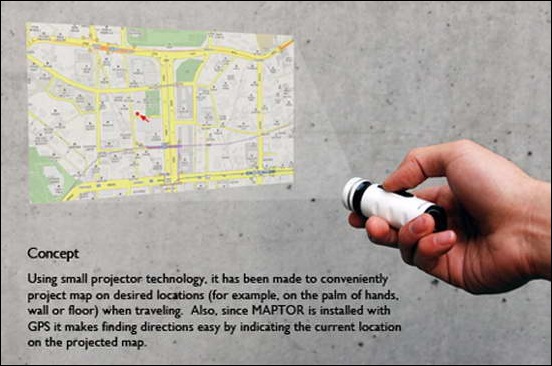
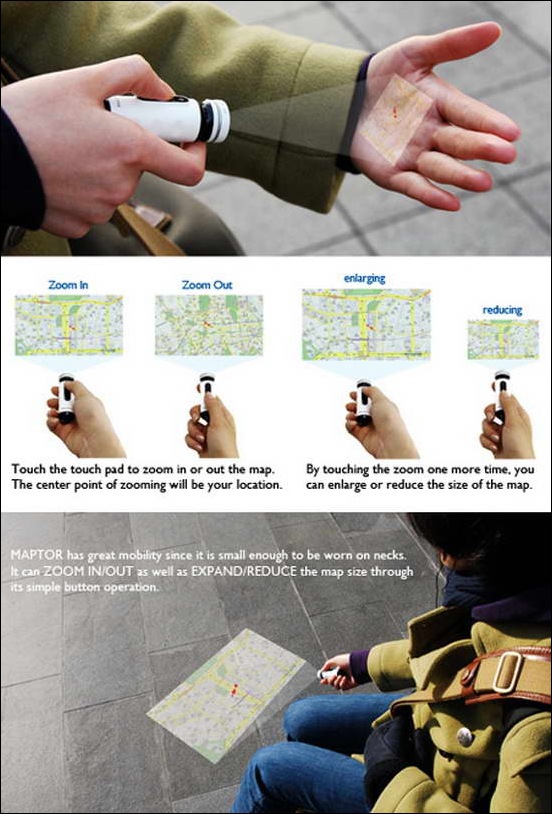
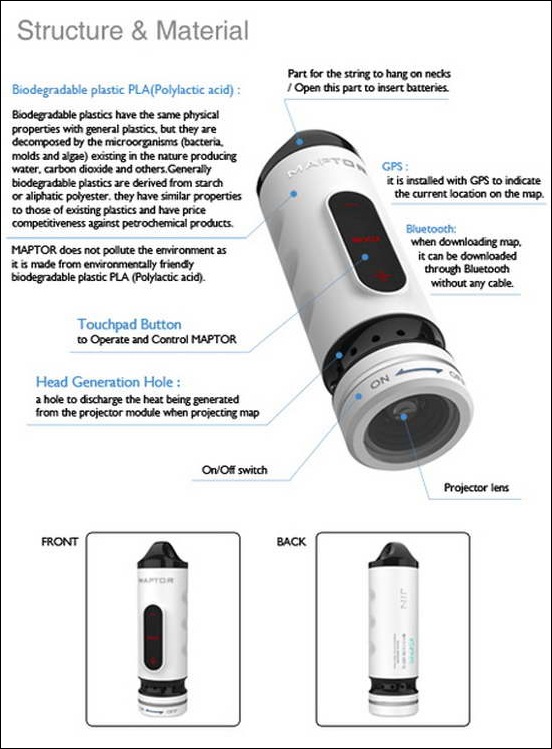
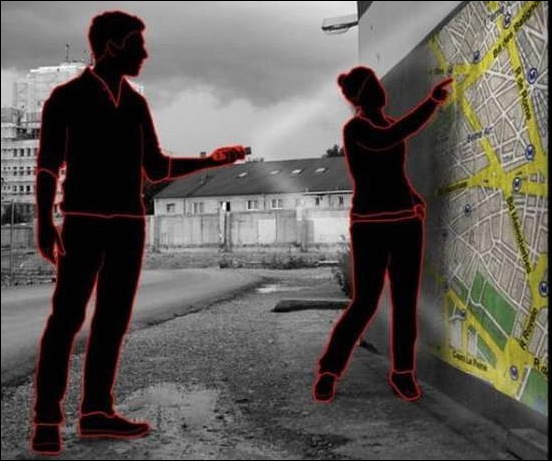
Some of you may have seen this already, but here’s a cool concept for those times when you just want to see a map, or when you want to point something out to someone without having to start at your smartphone screen or, God forbid, unfold a paper map…It’s called MAPTOR, and it’s a design concept from Jin-Sun Park and Seon-keun Park. Basically, you wear the MAPTOR projector on a lanyard or maybe even as a keychain or beltclip, and when you need to see your map, you press a button, and Presto! your map is projected onto whatever nearby surface is handy. Since it’s a concept only, it’s not available commercially, but I would love to have one…



October 2, 2011 0
August 20, 2011
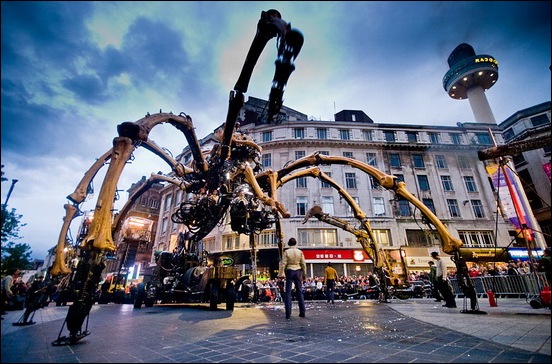
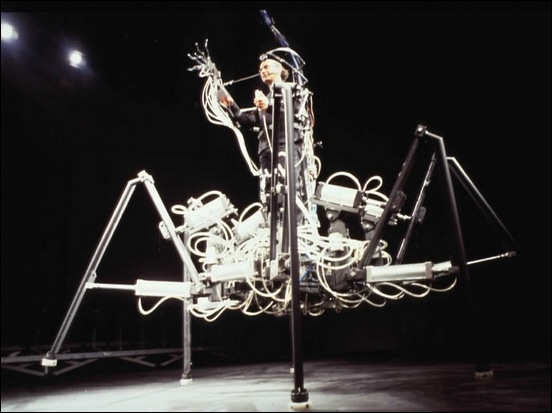
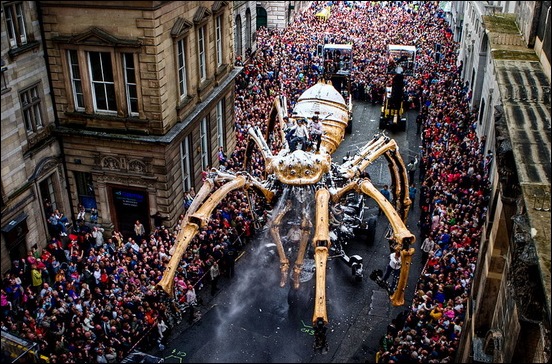
These giant mechanical spider turned into one of the largest machine ever built.








August 20, 2011 0
July 11, 2011
Topgear is blamed for all the evil in the world, and not known for creating things. To date, the boys (some say they have horns and a tail) are blamed for melting of Antartica, food crisis in Africa and even the Volcanic explosion in Iceland. But now, in a very weird sort of a way, the boys have inspired something creative.
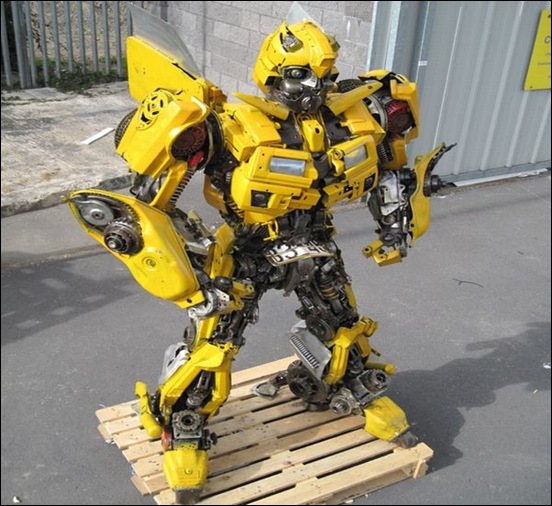
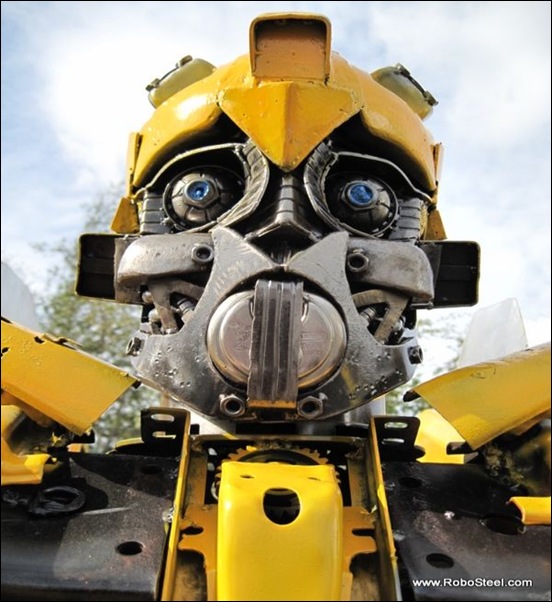
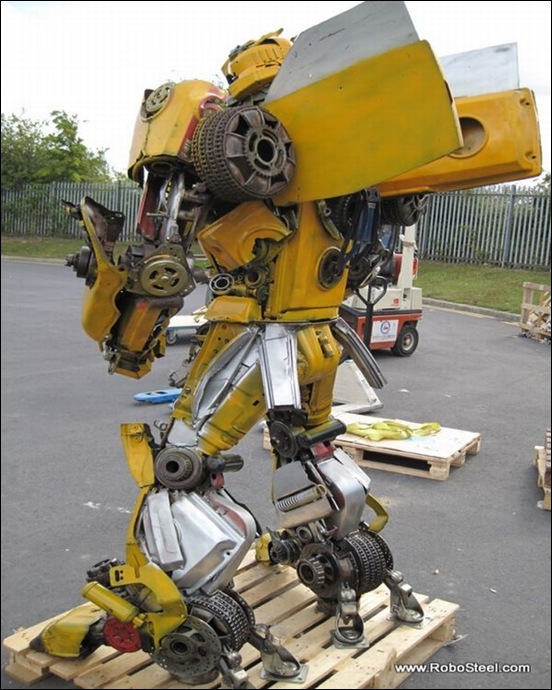
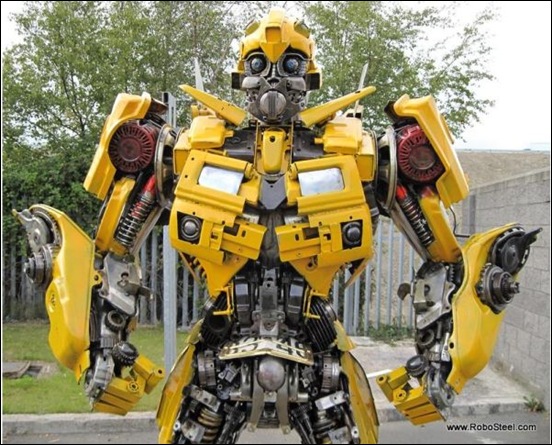
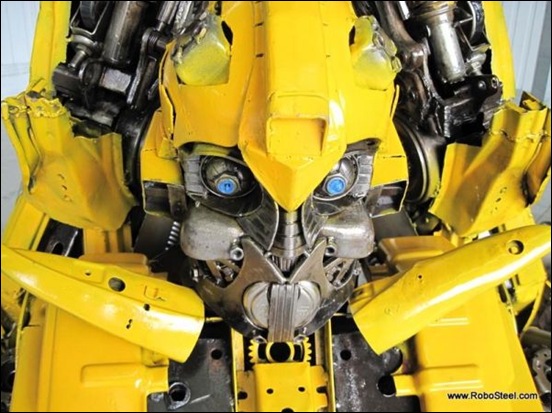
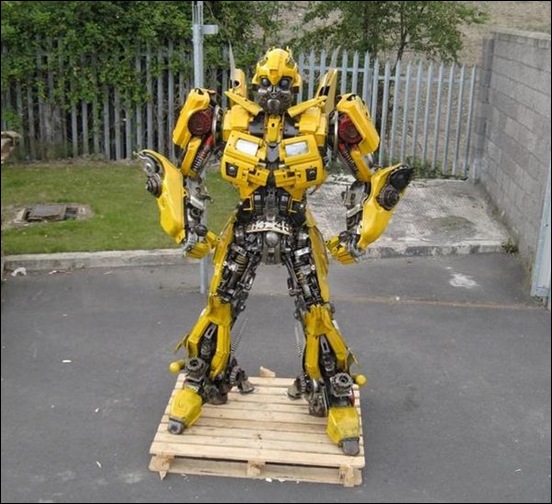
Everyone’s favorite Autobot, Bumblebee has been re-created by a lot of artists in the recent past. But now, the guys at Robosteel have created a life-sized replica of BumbleBee out of recycled Camaro parts. Standing over 2.2 meters, the replica is really one of the finest one we have seen till date. Interestingly, this idea was actually conceived at the Topgear MPH show way back in 2009. There are also plans of making a full size replica of Megatron so that Bumblebee can fight with someone.



via:SteeringNews
July 11, 2011 0
May 4, 2011
Diffusion of Innovations is a theory that seeks to explain how, why, and at what rate new ideas and technology spread through cultures.
Only a slice of the population qualifies as early adopters of technology – just 13.5% according to author Everett Rogers, who coined the phrase. You know the types – preordering cutting-edge gizmos before anyone else has heard of them, obsessively scanning industry and product development web sites, comparing notes with fellow geeks and trendsetters on what the next big thing will be.

Via: Savings.com
May 4, 2011 0
April 26, 2011
The Moonstream was designed to change public perceptions of NASA and entice people to be more interested in future space missions to the moon. It enables true comfort for habitants of the vehicle and also provides an appealing setting for the filming of the astronauts on the first ever trip from the North to South Pole of the moon. The adjustable suspension, inspired by NASA's current 'Athlete' chassis, allows for a wider stance, while the exoskeleton shell protects the main body and a separate cockpit enables the driver to be at constant eye level. The interior features a full-length retractable worktable and removable sleeping hammocks.


April 26, 2011 0
April 18, 2011
Fueled by the on-going debate around the cell phone radiation levels, the Israeli firm of the same name took matters into its own hands, offering an app that promises to detect the amount of radiation emanating from your handset, so you can, at least theoretically, make calls and not end up with a brain like a fried egg. Steve Jobs didn't exactly jump at this one. When Tawkon asked why the app had been block, Jobs responded in his characteristically pithy manner that he had "No interest." Once rejected, Tawkon took its business elsewhere, offering the app up the for the jailbroken gray market.


April 18, 2011 0